News & Updates
Complete archive of published updates, interactive simulations, and teaching announcements.

Stars Within 100 Light-Years, Exoplanets, Sci-Fi Voyages, and How Far Our TV Broadcasts Have Traveled
Public astronomical archives contain an incredible wealth of data, just rarely presented in an intuitive visual form. Explore a new interactive 3D atlas of the solar neighborhood within 100 light-years, featuring confirmed exoplanets and habitable zones, a relativistic flight planner with time dilation, trajectories from 30+ hard sci-fi novels, and Earth's 100-year expanding radio and TV broadcast sphere.
Read article →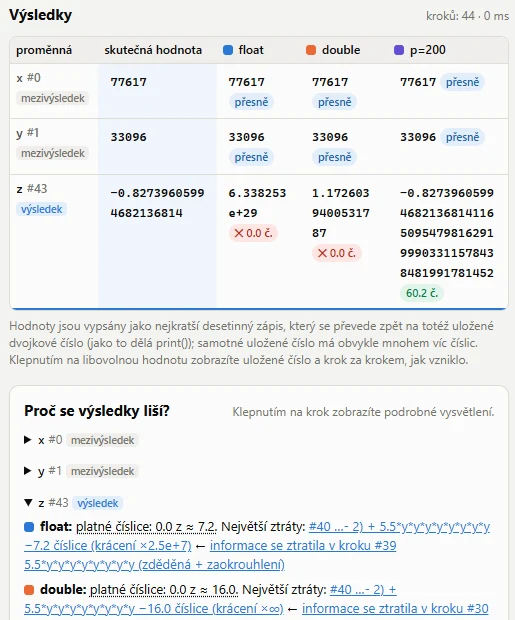
Precision Lab: Floating-Point Arithmetic Step by Step and Why the CPU Makes No Mistakes Even When Your Result Is Wrong
While a processor rarely makes mistakes, ALU arithmetic is fundamentally different from mental or paper-and-pencil math purely due to hardware representation. Explore Precision Lab, a new interactive JavaScript simulator covering floating-point pitfalls from subtle rounding drift to errors spanning tens of orders of magnitude.
Read article →New Tools section: DiskScope disk analyzer and PDF Studio document editor
A new Tools section has been added to the projects overview, featuring two open-source utilities for everyday work: DiskScope, a portable disk space analyzer and cleanup utility for Windows, and PDF Studio, a client-side web and desktop PDF editor.
Read article →General parsers, recursive ascent, and LR counterexamples: major update to the grammar analyser
The grammar analyser has received a major update, introducing general context-free parsers (CYK, ALL(*), Earley with Leo transitive items, ETTP, GLL, and GLR), recursive ascent, LR conflict counterexamples, a transformation guide, panic-mode recovery, and an improved interface.
Read article →Recursive descent and symbol table: new version of the grammar analyser
The grammar analyser now includes an in-browser interactive simulation of recursive descent parsing. As you step through the input, it displays the call stack, parse tree, and an automatically constructed symbol table with nested scopes. It serves as an educational demonstration of how the table is built – while heuristic token detection means it won't reliably catch every identifier in every grammar, it works and clearly illustrates the compiler mechanics.
Read article →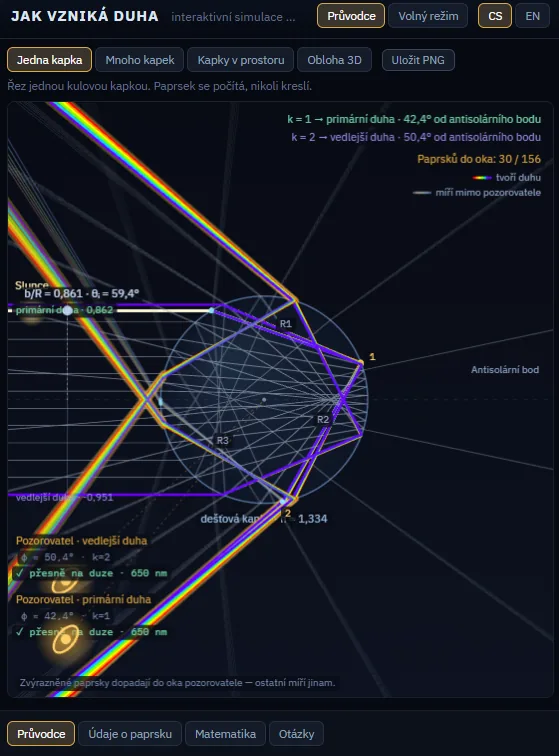
How a Rainbow Forms: Geometric Optics, Raindrops, and What AI Doesn't Tell You
Out of all my visualisations, the rainbow simulation took by far the most work – partly because it shows that when you don't fully know what you want, AI won't help that much. Explore the new interactive simulation explaining ray tracing, the 42° caustic, and why you can never reach the end of a rainbow.
Read article →Grammars without the eraser: a new grammar analyser for FJP
Anyone who has removed left recursion on paper knows how easily a prime, or a whole symbol, goes missing along the way. The new grammar analyser performs the transformations step by step, checks whether the language has changed and shows the LL and LR automata. You can open it straight from the examples in the exercises.
Read article →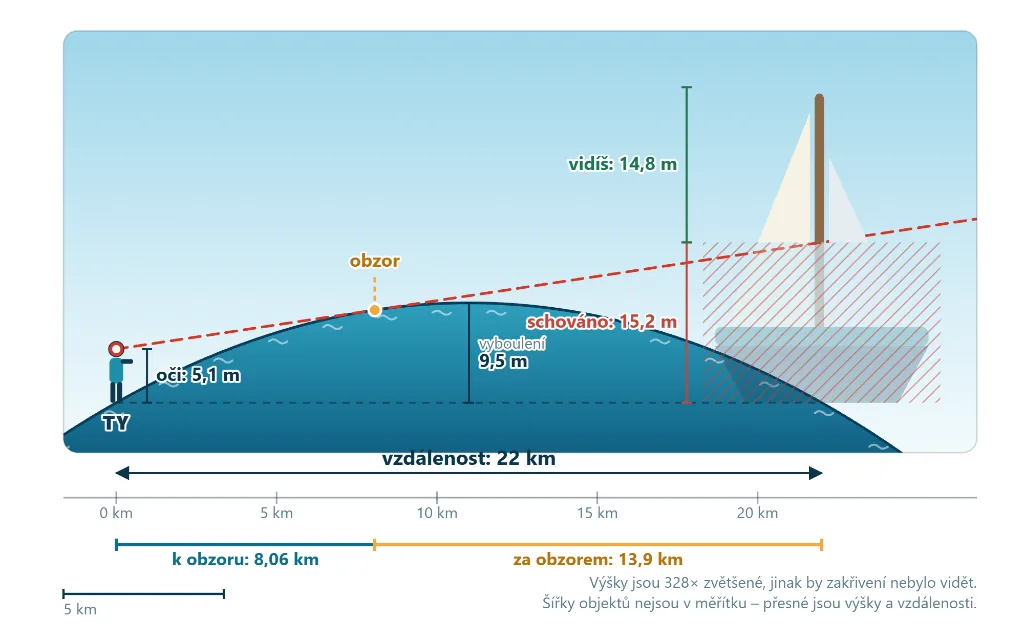
Beyond the Horizon: How Far Can We See and How Spherical Geometry Conceals Distant Ships
How far away is the real horizon, why does a lookout in a ship's crow's nest see noticeably further than crew on deck, and how tall must a tower be to spot a distant peak? Explore a new interactive simulator featuring curvature profiles, telescope views, step-by-step trigonometry, and exportable classroom problem sets.
Read article →New Version of the Online PL/0 Interpreter for Teaching
A substantially updated instruction interpreter for educational purposes, intended as a target platform for custom compiler implementations. If you encounter any issues, please let me know.
Read article →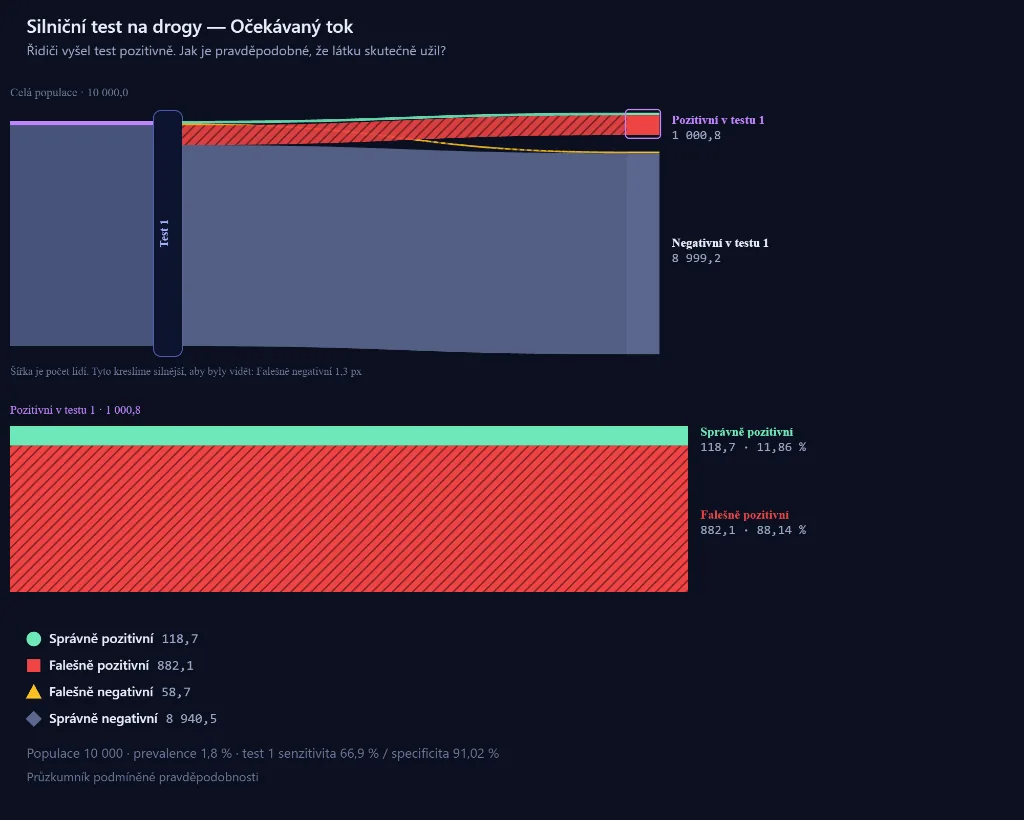
Conditional Probability & Bayes' Theorem: When Intuition Clashes with the Base-Rate Fallacy
Students should already know conditional probability and Bayes' theorem from high school, yet in practice screening results are often counter-intuitive. Try the new interactive simulation showing how prevalence, sensitivity, and specificity dictate real-world test reliability.
Read article →
The Finite Speed of Light and Cosmic Clocks: How Jupiter's Moon Io First Measured Light
How Ole Rømer first demonstrated that the speed of light is finite using the eclipses of Jupiter's moon Io, inspired by the practical problem of marine timekeeping. Explore the new interactive simulation directly in your browser.
Read article →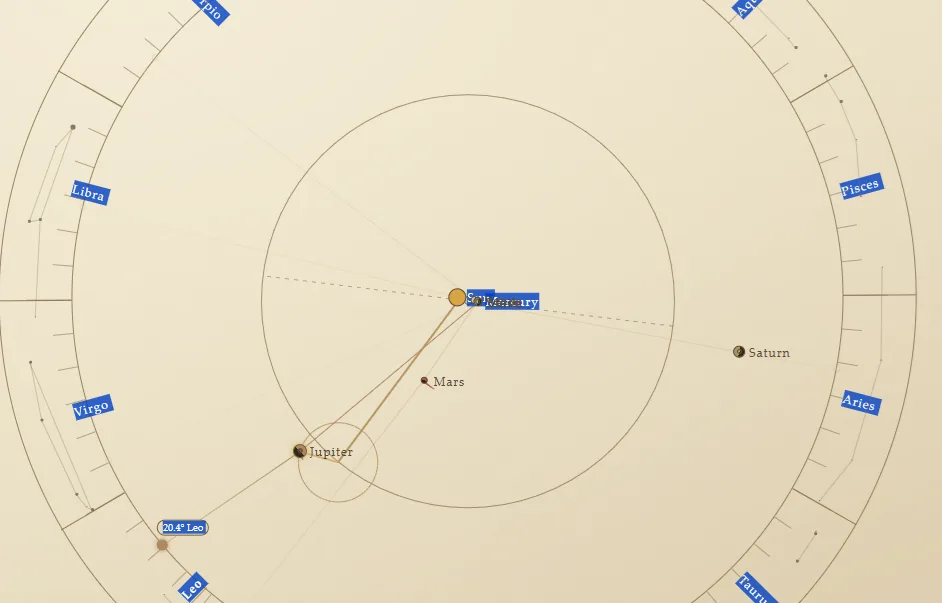
New Version of the Solar System Simulator: Four Historical Models
I have completed a new version of the Solar System simulator comparing 4 historical models – Ptolemaic, Copernican, Keplerian, and Newtonian. Read a few reflections on building the simulation and try it directly in your browser.
Read article →New website published
The new website has been published; if something important is not working for you, please let me know.
Read article →Preparation of materials for semester 2026/2027
Course materials for the 2026/2027 semester are being prepared; consultation hours are on Monday and Thursday.
Read article →